
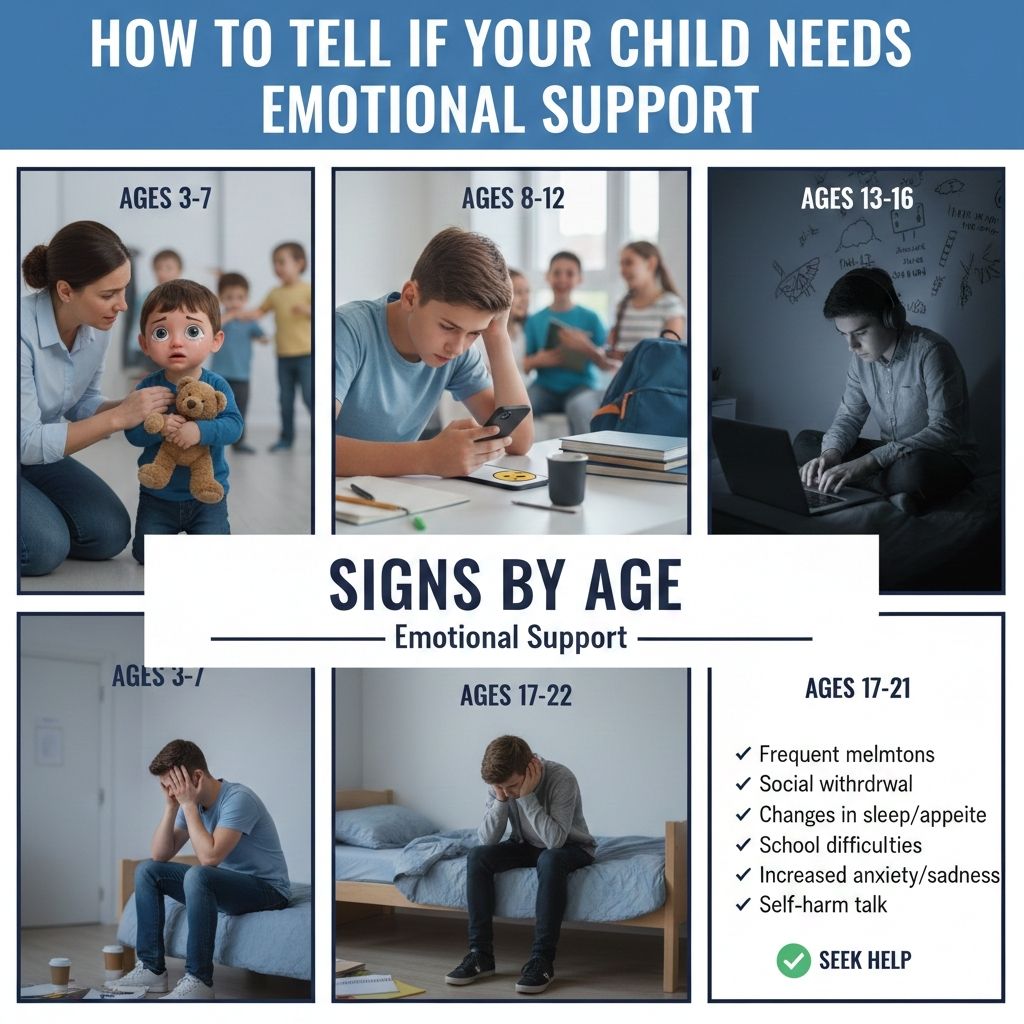
A parent?s worry is often your first clue
Most parents don?t miss ?big? red flags. What?s harder is knowing when smaller changes add up?especially because kids show stress differently at each stage. The goal isn?t to diagnose your child from a blog post. It?s to help you notice patterns, respond early, and get support before things feel overwhelming.
If you?re reading this, you?re already doing something important: paying attention.
Why signs look different by age
Kids and teens don?t always have the words (or safety) to say, ?I?m anxious,? ?I feel low,? or ?I?m not okay.? Instead, stress often shows up as:
- behavior changes
- physical complaints
- sleep/appetite shifts
- school or social changes
- emotional ?big reactions? that seem out of proportion
A helpful rule: look for change + duration + impact.
If something is new (change), lasts more than a few weeks (duration), and affects home/school/friends (impact), it?s worth a closer look.
Signs by age: what to watch for
Ages 3?6: big feelings, small bodies
At this age, emotions often show up in the body and behavior.
Common signs that may signal emotional distress:
- More frequent, intense tantrums than before
- Aggression (hitting, biting) that escalates
- Regression (bedwetting, baby talk, clinginess returning)
- New fears (sleeping alone, separation, ?monsters?) that don?t ease
- Persistent tummy aches or headaches without a clear medical cause
- Avoiding preschool/daycare or strong distress at drop-off
What this can mean: trouble with emotional regulation, anxiety, adjustment stress, sensory overload, or change at home (moves, new sibling, separation/divorce).
Ages 7?12: emotions show up as irritability, avoidance, and ?shutting down?
School-age kids may try to hold it together all day?then unravel at home.
Possible signs:
- Frequent meltdowns after school (?after-school restraint collapse?)
- Irritability, defiance, or arguing that?s new
- Avoiding school, friends, activities they used to enjoy
- Increased perfectionism or fear of mistakes
- Trouble focusing that appears suddenly (or worsens)
- Sleep problems: difficulty falling asleep, nightmares, early waking
- Physical complaints tied to school days (stomach, headaches)
What this can mean: anxiety, low mood, academic stress, ADHD-related overwhelm, social stress, bullying, or trauma reactions.
Ages 13?21: teens may hide distress?or show it as withdrawal or anger
Adolescence comes with normal moodiness. The difference is degree and persistence.
Possible signs:
- Pulling away from family/friends, isolating more than usual
- Loss of interest in hobbies, sports, music, or goals
- Noticeable drop in grades, attendance, or motivation
- Persistent irritability, anger, or emotional numbness
- Changes in sleep (sleeping all day or insomnia) and appetite
- Increased risk-taking or impulsivity
- Talking about feeling hopeless, worthless, or like a burden
Important: If your teen expresses self-harm thoughts, suicidal ideas, or you notice self-injury, seek immediate professional help or emergency support in your area.
When is it ?normal? vs. time to seek help?
Consider reaching out for professional support if you notice:
- Symptoms lasting 2?4+ weeks
- A pattern that?s getting worse (not improving)
- Your child is struggling at school, home, or socially
- You?re changing family life to ?avoid blow-ups?
- You feel stuck: ?We?ve tried everything, nothing works?
- There?s a major life event: divorce, grief, trauma, relocation
Early support often means shorter, more effective care.
What you can do next (without waiting for it to get worse)
1) Name what you see?without judgment
Try:
- ?I?ve noticed you?ve been quieter lately.?
- ?It seems like mornings are feeling really hard.?
- ?I?m not mad. I want to understand.?
Avoid:
- ?You?re overreacting.?
- ?You?re fine.?
- ?Why are you doing this??
2) Focus on patterns, not single incidents
Track for 7?10 days:
- sleep
- mood
- triggers
- appetite
- school feedback
- conflict frequency
This helps you speak clearly with teachers and clinicians.
3) Build small regulation habits
Simple tools that help many kids:
- 5-minute movement break after school
- ?quiet creativity? (drawing, coloring, music) before homework
- predictable bedtime routine
- fewer rapid transitions (especially for anxious kids or ADHD)
4) Consider creative therapies when talking is hard
At Uguet Consulting, many children and teens respond well to non-verbal, creative approaches like Art Therapy and Music Therapy, because they:
- reduce pressure to ?explain everything?
- help process feelings safely
- strengthen coping skills and self-esteem
- support emotional regulation through structured creativity
If you?re unsure what you?re seeing?or you want a clear plan?schedule an initial parent consultation with Uguet Consulting. We?ll help you:
- identify what?s most urgent
- choose the right level of care (individual, family, art or music therapy)
- create a practical plan for home and school
- Serving families across Florida Cape Coral.
FAQs (5)
1) How long should I wait before seeking help?
If signs last 2?4 weeks, worsen, or impact school/home life, it?s reasonable to consult.
2) What if my child refuses to talk to a therapist?
That?s common. Creative therapies (art/music) and gentle engagement strategies can help reduce pressure.
3) Can behavior problems be anxiety?
Yes. Anxiety often shows up as irritability, avoidance, perfectionism, or ?acting out.?
4) Will therapy label my child?
Quality therapy focuses on skills, support, and growth?not labels. A good clinician explains everything clearly.
5) What happens in the first appointment?
Usually: parent history, concerns, goals, and a plan. Some children benefit from a gradual, relationship-first approach.